
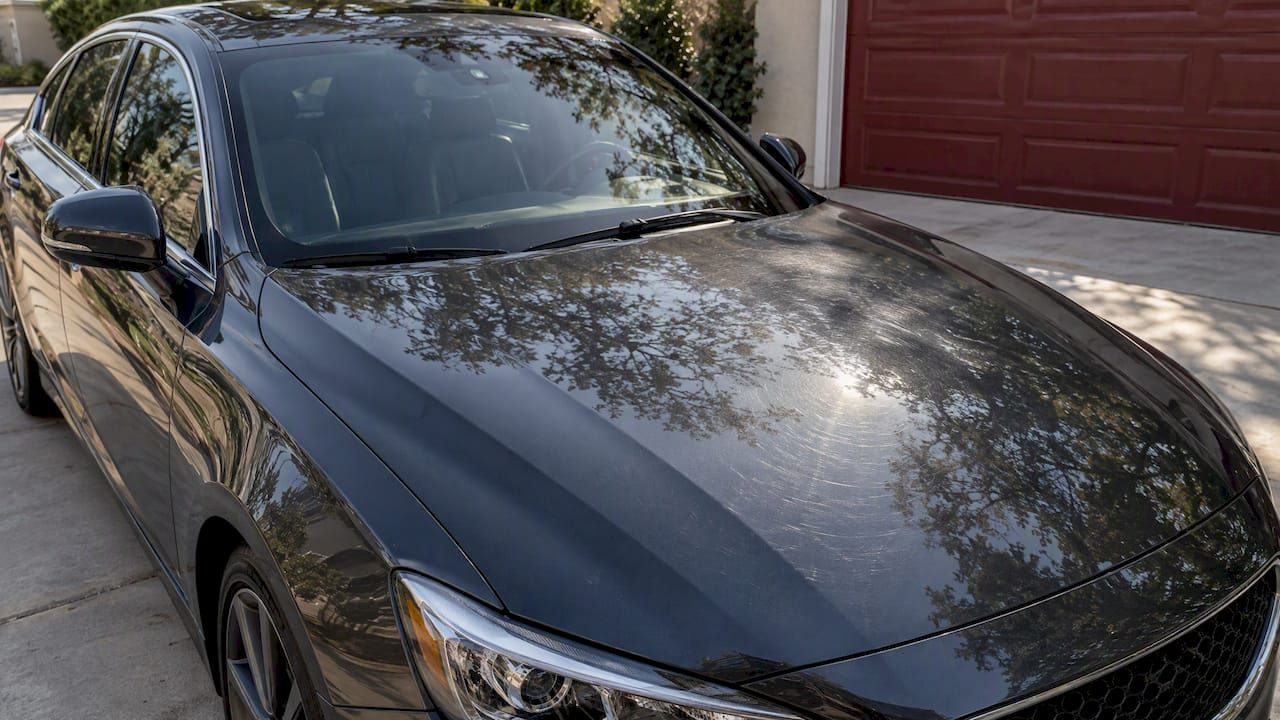
Car paint correction is a machine-polishing process that permanently levels away swirl marks, light scratches, oxidation and etching in your clear coat, so the original gloss comes back without a repaint. It cannot fix everything. Scratches that cut through the clear coat, peeling paint and rust need bodywork, not polishing. Below you will find what it removes, how one-step and two-step correction differ, what a job costs, and how to keep the result looking sharp.
TL;DR
- Paint correction removes defects by abrading a very thin layer of clear coat. It is a restoration, not a coating or a wax.
- One-step correction suits light swirls on a daily driver. Two-step (also called 2-stage) uses a heavier cutting pass, then a finishing pass, for deeper defects.
- Scratches you can catch with a fingernail, peeling clear coat and rust are usually beyond what polishing can fix.
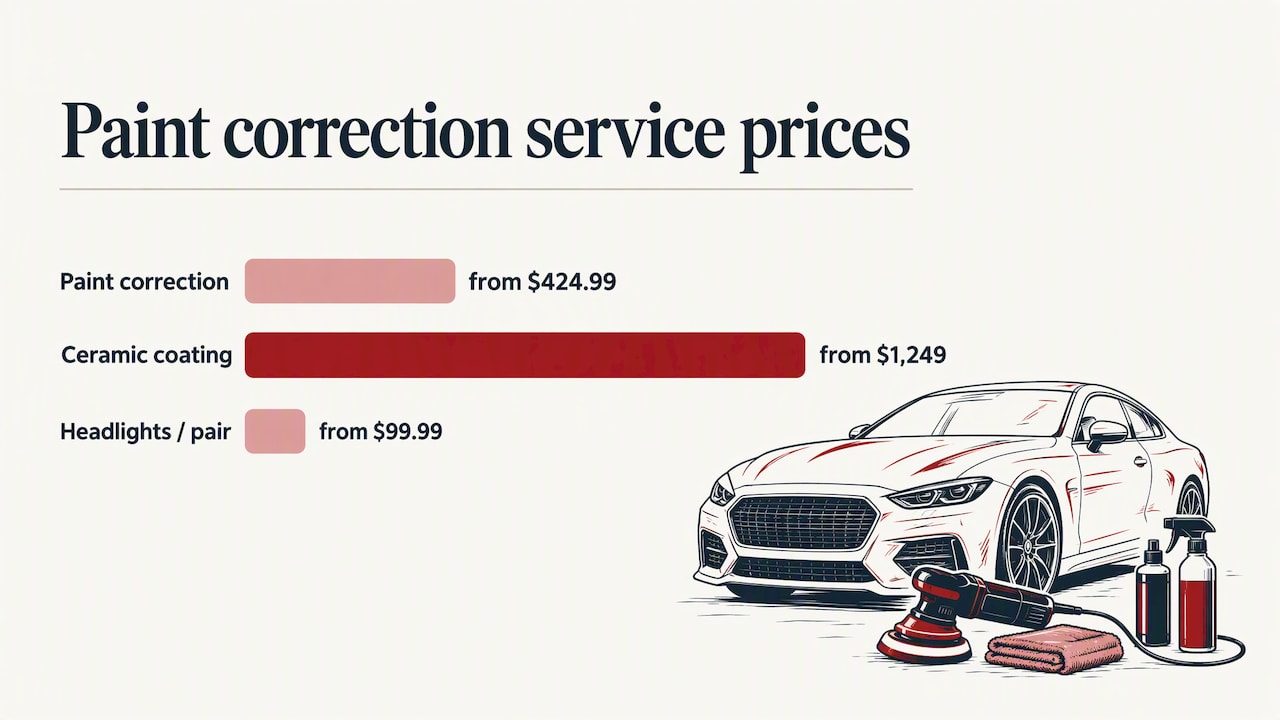
- Our paint correction starts from $424.99. Ceramic coating after correction starts from $1,249.
- The correction itself is permanent. New swirls are not, so protection and a gentle wash routine decide how long it looks perfect.
Table of Contents
- What paint correction actually is
- What it can and can’t fix
- How the process works, step by step
- One-step vs two-step (2-stage) correction
- Paint correction for scratches: a realistic expectation
- What paint correction costs
- Why a mobile detailer can do this at your home
- How long the results last, and how to protect them
- When paint correction is not worth it
- Our approach to paint correction
- Book paint correction at your driveway
- FAQ
- Sources
What paint correction actually is
Your car’s color sits under a clear coat, a transparent layer that provides the gloss and takes the daily abuse. Every automatic wash brush, gritty towel and dry wipe leaves microscopic scratches in that layer. Together they scatter light, which is why dark paint in direct sun looks hazy or covered in spider webs.
Paint correction removes those imperfections instead of hiding them. According to Family Handyman, it restores the original shine without completely repainting, and it can address minor oxidation, scratches, swirl marks, fading and etching from acidic sources such as bird droppings and tree sap.
That difference matters when you compare services. A wax or glaze can fill and mask fine marks for a few weeks. Correction cuts the edges of each scratch down until the surface is flat again, so the fix does not wash out.
What it can and can’t fix
Before any polishing, a good detailer sorts the problems into two groups. As Auto Laundry News explains, paint problems are either surface contamination or damage that extends into the paint layers. The first group often comes off without cutting paint at all. The second needs abrasion, and only up to a point.
Usually correctable
- Swirl marks and light scratches from washing and drying.
- Water spots and mineral etching that have not eaten deep into the clear coat.
- Bird dropping and tree sap etching, when the damage is shallow.
- Light oxidation and dullness, common on cars parked outside in Southern California sun.
- Overspray and bonded contamination. Auto Laundry News notes most overspray can be removed with detailer’s clay, so this often needs decontamination rather than heavy polishing.
Often not correctable
- Deep scratches. Family Handyman says correction can remove scratches, but touch-up color may be necessary. The practical test: if your fingernail catches in it, the scratch probably goes beyond the clear coat.
- Orange peel. Auto Laundry News says it can only be removed by wet-sanding, which takes more clear coat than ordinary correction and is a judgment call for every car.
- Peeling, clear coat failure, corrosion. PPG’s defects guide lists peeling, clearcoat delamination and corrosion among common paint defects. Those are repair or repaint jobs.
- Matte and satin finishes. PPG warns against wax, polish, rubbing compounds, glazes and mechanical polishers on matte paint, because abrasion or burnishing can leave permanent shiny spots. If your car has a matte finish, do not book correction.
An honest detailer tells you which category your defects fall into before touching the car. Be wary of anyone who promises a flawless result without inspecting the paint first.
How the process works, step by step
The sequence is the same whether the job is small or large. The time goes into each stage.
- Wash and decontaminate. Family Handyman’s description starts with thoroughly cleaning the car. Auto Laundry News lists what can be stuck to paint: environmental fallout, rail dust, overspray, bugs, tar, cement, road grime and mineral water spots. Polishing over that grit just grinds it into the finish.
- Inspect and test. The detailer assesses the paint’s condition and hardness, then picks a pad and compound. Paint varies by manufacturer and by age, so a test spot on one panel tells you what the whole car will need.
- Cut. A machine polisher with the chosen pad and compound levels the defects. The goal, as detailers commonly describe it, is to remove as little clear coat as possible while reaching the customer’s goal.
- Refine. Family Handyman advises polishing with a light touch and wiping off residue to evaluate the result. Wiping the panel clean matters because polishing oils can fill scratches and make them look gone when they are not.
- Protect. The final step is a high-quality wax or sealant, or a ceramic coating for longer protection.
The result depends heavily on the person holding the polisher. Machine abrasion removes paint permanently, so judgment on how much to take is the skill you are paying for.
One-step vs two-step (2-stage) correction
The stage count describes how many passes the detailer makes with different pad and liquid combinations.
| One-step | Two-step (2-stage) | |
|---|---|---|
| What happens | One pad and one polish, a single pass to improve gloss and remove light defects | A heavier compounding pass for deeper defects, then a finishing polish to refine the surface |
| Best for | Light swirls, dullness, newer or well-kept paint, daily drivers | Heavier swirling, water-spot etching, dark or neglected paint |
| Time | Shorter | Noticeably longer |
| Limit | Leaves deeper defects behind | Still can’t fix defects that go through the clear coat |
Some shops add a third stage for show-level results. More stages mean more clear coat removed and more hours billed, so more is not automatically better. Clear coat is finite, and a car that has been heavily corrected several times has less margin left.
How to choose: if your car is light-colored, fairly new and mainly looks dull, one step often gives most of the visible benefit. If it is black or dark blue, has been through years of automatic washes, or shows swirls in sunlight from every angle, two-step is more likely to give you the result you imagine. Be skeptical of any percentage claim of “defects removed” that is not tied to your actual paint. Results depend on the paint, the defects and the technique.
Paint correction for scratches: a realistic expectation
This is the question we hear most. Light scratches from a wash mitt, a jacket zipper, a branch brushing the door or a dry towel are what correction is for. Scratches that have gone through the clear coat into color or primer cannot be polished out, because there is nothing left to level. Family Handyman’s guidance is the right frame: correction can remove scratches, but touch-up color may be necessary for the deeper ones.
What polishing can do for a deep scratch is soften its edges so it catches less light. That is an improvement, not a removal, and a good detailer will tell you which marks on your car fall into that group before work starts.
What paint correction costs
Prices vary by region, shop experience and correction level. Family Handyman reports that one expert considers $100 to $125 per hour a realistic expectation, and that some shops charge by the scratch or panel while most charge by the hour. Vehicle size, paint hardness, color and the condition of the finish all change the hours.
For our own work in North County San Diego, paint correction starts from $424.99. The final price depends on your vehicle and what the paint needs, and we confirm it before any work begins. Related prices from our current list:
| Service | Price |
|---|---|
| Exterior detail | $104.99 to $333.48 |
| Full detail | $234.99 to $594.99 |
| Paint correction | From $424.99 |
| Ceramic coating | From $1,249 |
| Headlight restoration | From $99.99 per pair |
A useful way to compare quotes is to ask what each one includes: how many stages, whether decontamination is included, what protection is applied at the end, and whether the vehicle is inspected before pricing. A low number that skips decontamination or protection is rarely cheaper in the long run.
Why a mobile detailer can do this at your home
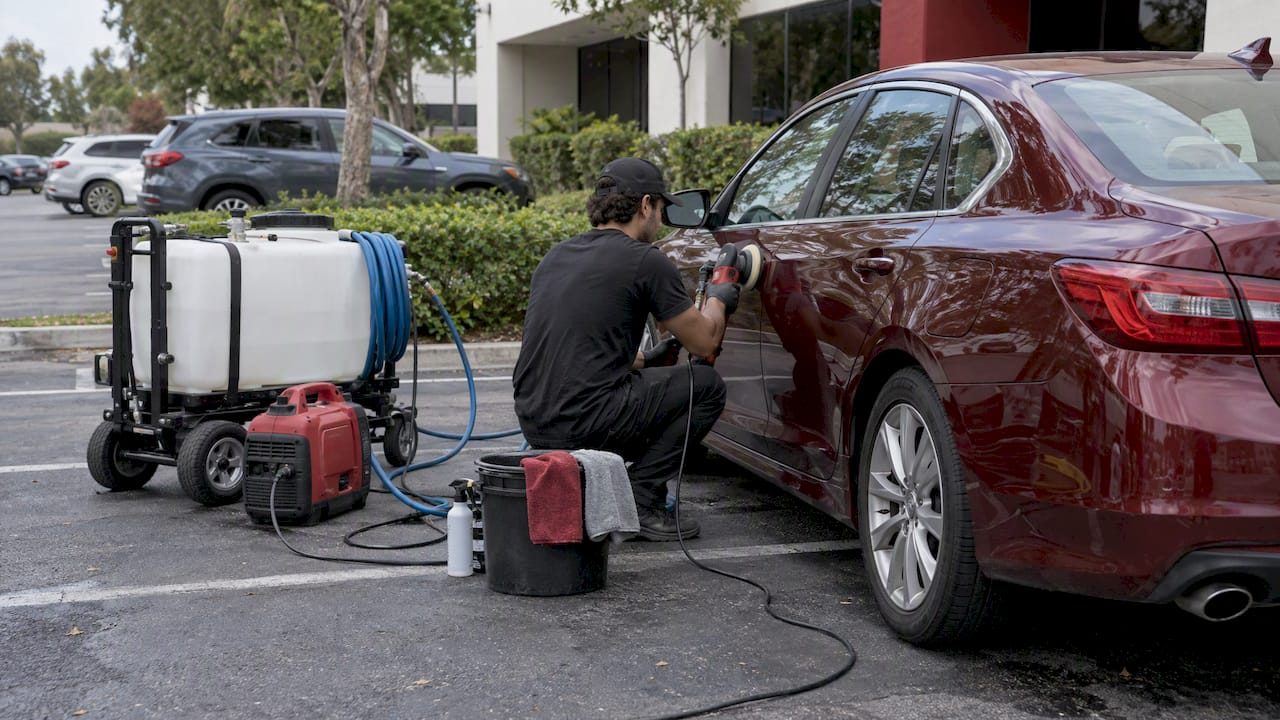
Paint correction needs clean water, reliable power for the polisher and a shaded, clean working area. People assume that means a shop. It does not have to. We bring spot-free water and power with us, so you do not need a hose or an outlet, and we work wherever the car is parked.
If you also want the interior done or want to see how a typical visit runs, our full detailing options show what can be paired with correction in one appointment.
How long the results last, and how to protect them
The correction itself is permanent, because the defects were removed rather than covered. What does not last is a flawless surface that is left unprotected and washed badly. New swirls appear from the same causes as the old ones. Different detailers quote different lifespans, and there is no single official number, so treat any exact month count as a rough guide. Protection and washing habits matter more than the calendar.
What helps most:
- Protect right away. Family Handyman’s process ends with a high-quality wax or sealant. Wax and sealants wear off and need reapplying. A ceramic coating is the longer-lasting option and, from $1,249 with us, is typically applied to freshly corrected paint so you are not sealing in defects.
- Use the two-bucket hand wash method with a clean microfiber mitt, and avoid automatic brush washes.
- Dry with clean, plush microfiber and never wipe a dusty car dry.
- Rinse off bird droppings and sap quickly. Etching from acidic contamination is one of the defects correction exists to fix, and it comes back if you leave them baking on the paint.
- Keep it on a schedule. Our maintenance plans run $110 to $160 a visit weekly, or $175 to $225 a visit monthly, which keeps washing gentle and consistent.
Corrected paint with a sealant or coating is also easier to wash, because dirt does not grip the surface as hard.
When paint correction is not worth it
Correction is not always the right spend.
- The car is about to be traded in or sold cheaply. A thorough detail may return more per dollar.
- The damage is deeper than the clear coat. You will pay for polishing and still see the defects. Get a body shop quote.
- The finish is matte or satin, for the reasons PPG gives.
- The paint has been repainted badly or clear coat is failing. Polishing thin or unstable clear coat can make it worse.
A rule worth keeping: if a detailer will not discuss limits and only tells you what they can fix, find another detailer.
Our approach to paint correction
We do not treat correction as a package to push on every car. Julian performs every job himself, from the first wash to the final wipe-down, so the person who inspects your paint is the person who corrects it. That matters in a skill-based job, because decisions about how much clear coat to take are made panel by panel.
Our view, built on how the work goes:
- Correct only what the paint needs. Taking more clear coat than the goal requires uses up a resource you cannot get back.
- Tell you what will not come out. If a scratch is too deep, you hear it before we start, not after.
- Confirm the price first. There are no surprises at the end of the job.
- Check the whole vehicle. A complimentary multi-point inspection is part of our service, so you also learn about issues like tired headlights or worn trim while we are there.
- Not finished until you are satisfied.
If your car is a good candidate, correction followed by a coating is the most durable way to keep it looking right. If it is not, we will say so.
Book paint correction at your driveway
If your paint looks hazy, swirled or dull and you live in North County San Diego, we come to you with water and power included. Tell us the make, color and what bothers you about the finish. We confirm the price before we start. Take a look at our paint correction service, or if you are in Escondido, the local page for paint correction there.
Motorcycle owner? The same principles apply on smaller, more complex surfaces, and we cover them on our motorcycle detailing page.
FAQ
What is a paint correction on a vehicle?
It is a machine-polishing process that removes a very thin layer of clear coat to level out swirl marks, light scratches, oxidation and etching. The goal is to bring back the original gloss without repainting. It is followed by wax, sealant or coating to protect the result.
Is two-step paint correction worth it over one-step?
It depends on the paint. One-step handles light swirls and dullness, often enough for a newer or lighter daily driver. Two-step uses a heavier cutting pass and a finishing pass, so it suits darker colors, older paint and deeper swirling. It takes longer and removes more clear coat, so it should be chosen for a reason.
Can paint correction remove all scratches?
No. It removes scratches that sit in the clear coat. If a scratch goes deeper and your fingernail catches in it, polishing can only soften it, and touch-up paint or a body shop may be needed.
How much does car paint correction cost?
Most shops charge by the hour, and Family Handyman cites $100 to $125 per hour as a realistic expectation from one expert. Our paint correction starts from $424.99, and we confirm the final price for your vehicle before work begins.
How long does paint correction last?
The defects removed do not come back. New swirls and etching can, depending on how you wash and protect the car. Applying a sealant or ceramic coating after correction and using a gentle hand-wash routine is the best way to keep the finish looking corrected.
Sources
- What Is Paint Correction, and How Does It Work? (Family Handyman)
- Paint Correction and Protection, Part I (Auto Laundry News)
- Common Paint Defects Guide (PPG)
- Matte Finish Care Guide (PPG)