
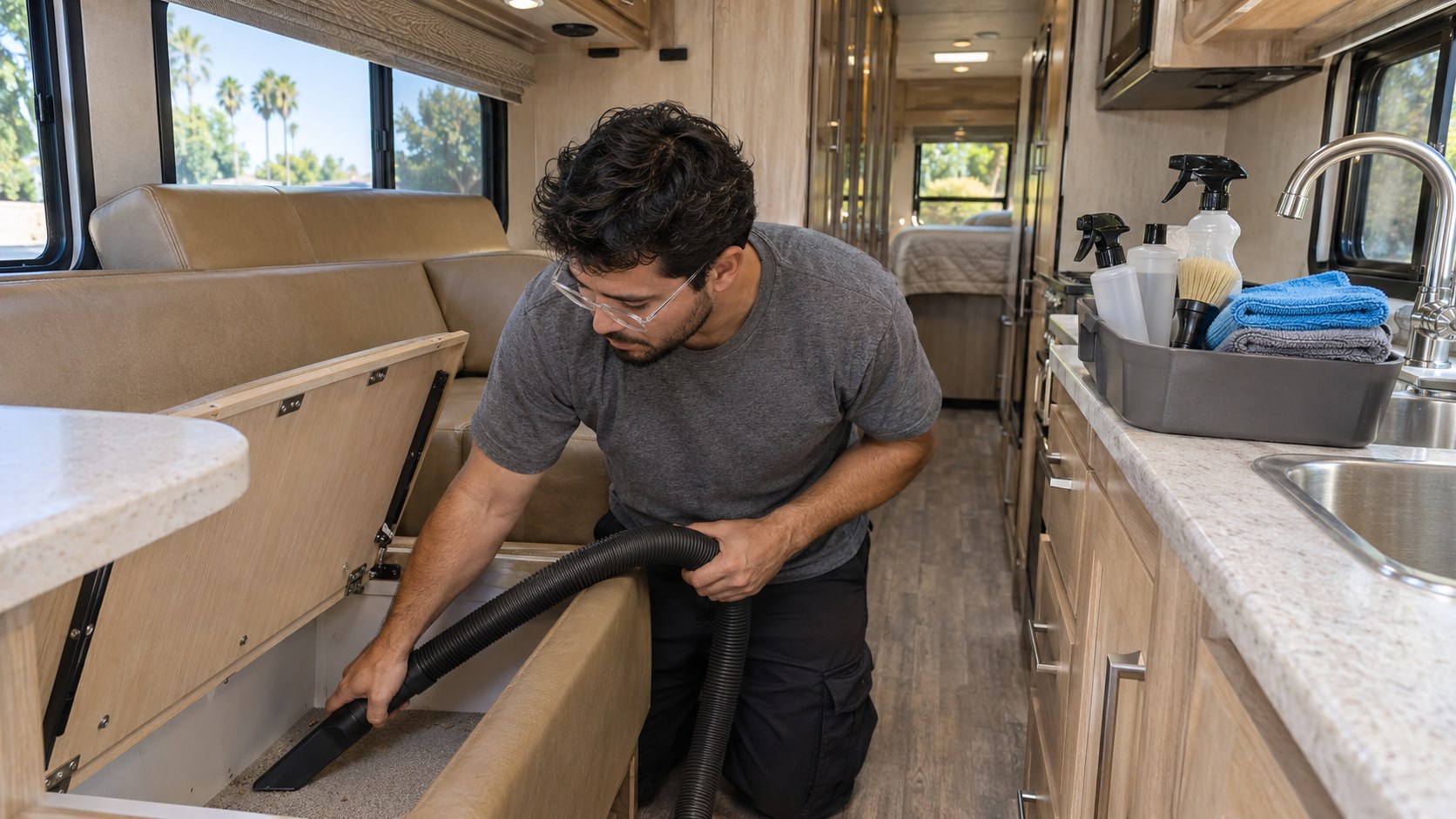
RV interior detailing is a top-to-bottom deep clean and reconditioning of everything inside your motorhome, fifth wheel or trailer: carpet, upholstery, vinyl, cabinets, countertops, bathroom, galley, windows and the small spaces a weekly tidy never reaches. It goes well past vacuuming and wiping. In North County San Diego, we do it at your RV’s location, bringing our own spot-free water and power, so you don’t have to hook anything up or drive to a shop.
Below you’ll find what a proper interior detail covers, how the work changes with each material, how to handle stains before you call anyone, how often to book, and what shapes the price.
TL;DR
- An interior detail restores every surface inside the RV, including crevices, upholstery, vinyl, flooring, windows and the bathroom. A routine clean only removes what you can see.
- RV interiors mix many materials, so the method has to match the surface. Solvents and household cleaners can damage vinyl, laminate and fabric.
- Our RV detailing starts at $9 per foot for an exterior wash. Interior cleaning is quoted separately, and we confirm your exact price before any work begins.
- Most owners do light upkeep weekly and book a professional interior detail once or twice a year, more often with pets, kids or full-time living.
- We come to you in North County San Diego and supply the water and power.
Table of Contents
- What RV interior detailing actually includes
- Why RV interiors need a different approach than a car
- Removing RV upholstery stains: what you can try, and when to stop
- What a professional RV interior service does that you can’t easily do yourself
- How we detail RV interiors in North County San Diego
- How often should you book an interior detail?
- What affects the price of RV interior detailing
- Book RV interior detailing at your location
- FAQ
- Sources
What RV interior detailing actually includes
The International Detailing Association describes detailing as thorough cleaning and reconditioning of a vehicle’s interior and exterior. It is a meticulous, step-by-step process meant to restore appearance and protect your investment, and it covers cracks and crevices that a wash skips. That completeness is the real difference from routine cleaning.
In an RV, that translates into a long list of areas. A typical interior detail covers:
- Dry soil removal first. Dusting from the ceiling down, then detailed vacuuming of carpet, rugs, seats, cushions, tracks, drawers and cabinet bottoms.
- Upholstery and fabric. Spot treatment of stains, then cleaning matched to the fabric type.
- Vinyl, leatherette and leather. Gentle cleaning, then conditioning where the material calls for it.
- Hard surfaces. Dinette tables, countertops, cabinet faces, dash and switch panels, door pockets, vents and handles.
- Windows, mirrors and blinds. Glass cleaned inside, plus dusting or wiping of blinds and window treatments.
- Bathroom and galley. Shower walls, sink, toilet exterior, cooktop, and the exterior of the fridge and microwave.
- Flooring. Vinyl plank, linoleum or rubber flooring cleaned without abrasives, with carpet extracted where it needs it.
- Odor and sanitizing. Targeted treatment where pets, smoke, food or damp have left a smell.
No two RVs get the same checklist. A 22-foot Class C used on weekend trips needs a very different job from a 40-foot diesel pusher that has been lived in for a season with two dogs.
How it differs from a quick clean
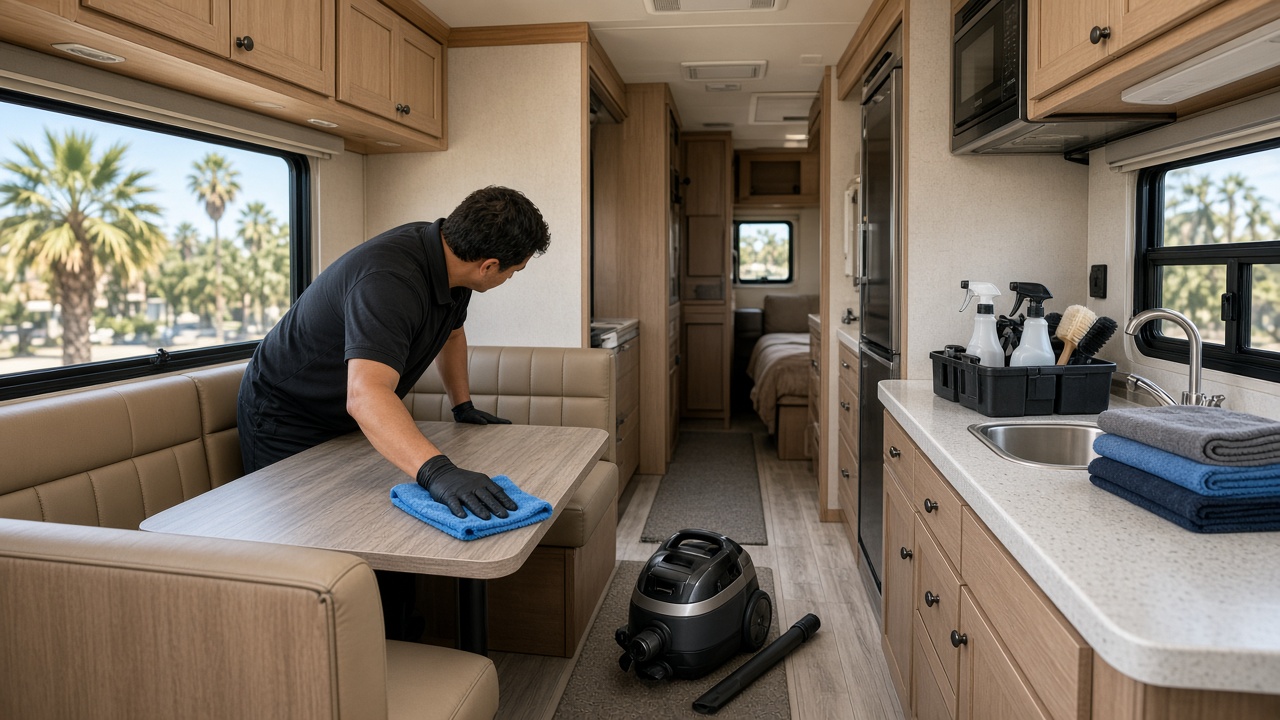
A quick clean is what you do before a trip: vacuum the floor, wipe the counters, empty the trash. A detail is what happens when someone removes the cushions, works into seams and tracks, treats the stains, and leaves the materials in better condition than they started. Think of the first as maintenance and the second as a reset.
Why RV interiors need a different approach than a car
A car interior is mostly one set of automotive-grade materials. An RV is closer to a small house on a truck chassis. You have residential-style upholstery, laminate cabinetry, fiberglass, vinyl wall coverings, fabric ceilings, appliances and bathroom fixtures, all within a few feet of each other.
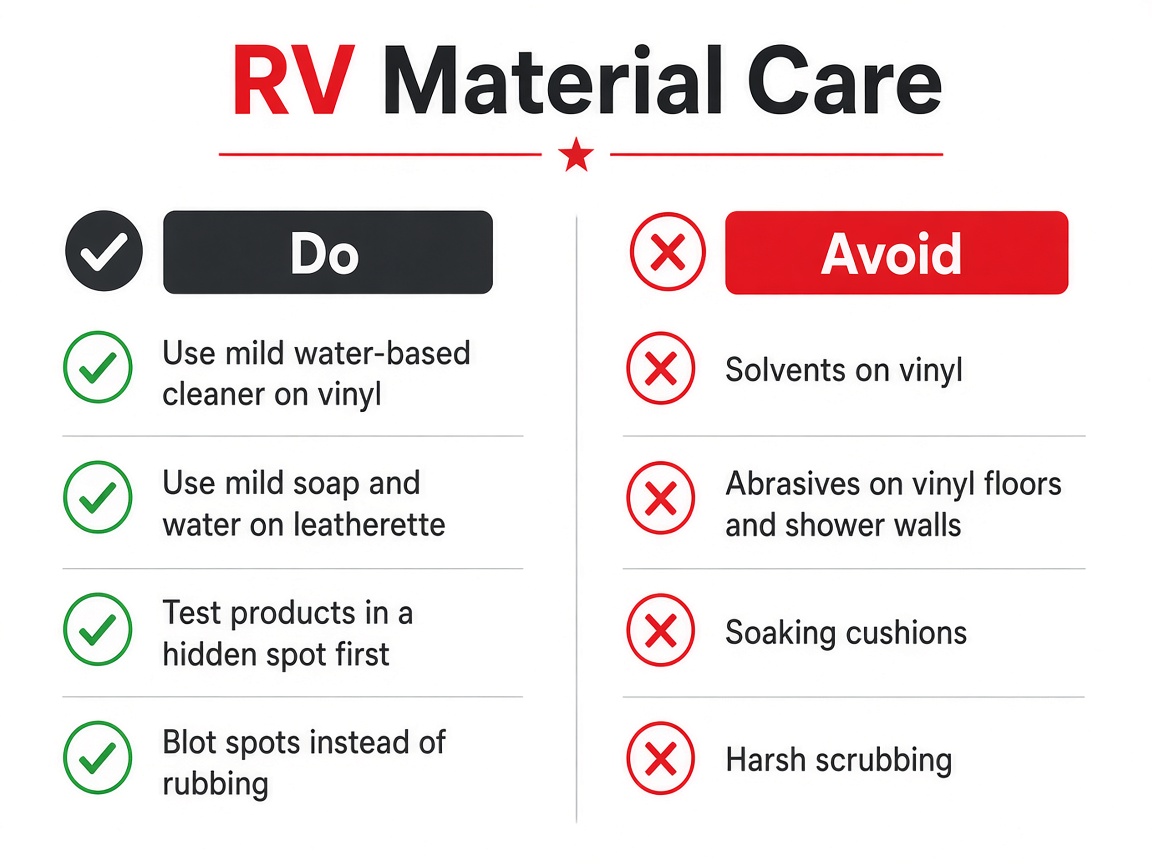
Manufacturers say so directly. Winnebago’s care guidance calls for material-specific methods: a mild water-based cleaner for vinyl, mild soap and water for leatherette, mild cleaners for plastics, professional dry cleaning for draperies, non-abrasive cleaning for vinyl flooring and shower walls, and testing in a hidden spot before you use any product. Jayco’s owner blog gives the same direction: check the manufacturer’s recommended cleaners, avoid solvents on vinyl, and blot a spot rather than rubbing it.
| Do | Avoid |
|---|---|
| Use mild water-based cleaner on vinyl | Avoid solvents on vinyl |
| Use mild soap and water on leatherette | Avoid abrasives on vinyl floors and shower walls |
| Use mild cleaners on plastics | Avoid soaking cushions or rubbing a stain in |
| Have draperies professionally dry-cleaned | |
| Test products in a hidden spot first | |
| Blot spots instead of rubbing |
A good RV detailer is selective, not aggressive. The strongest product is rarely the right one, and a cleaner that works on a fabric seat can cloud a laminate countertop or strip the finish from paneling.
Material by material
| Surface | What works | What to avoid |
|---|---|---|
| Vinyl seating | Mild water-based cleaner, blotting | Solvents, harsh scrubbing |
| Fabric or suede upholstery | Spot treatment, extraction, or professional cleaning per the maker’s tag | Soaking the cushion, rubbing the stain in |
| Paneling and cabinet faces | Mild soap and lukewarm water, soft cloth | Abrasive cleaners, organic solvents |
| Countertops | Cleaner suited to the surface | Harsh chemicals, abrasive pads |
| Vinyl flooring, shower walls | Non-abrasive cleaning | Scouring powders, stiff brushes |
| Draperies and ceiling fabric | Professional cleaning or vacuuming per maker’s guidance | Wet scrubbing |
The guidance behind this table comes from the Winnebago and Jayco pages linked above. Grand Design’s 2026 Foundation owner’s manual (Interior Care, pp. 138 to 140) says the same about paneling and countertops: mild soap and lukewarm water on vinyl paneling, no abrasives, no harsh chemicals on countertops, and a test in a small out-of-sight spot before any new cleaner. Your own owner’s manual should have the last word, because component makers such as sofa, appliance and flooring suppliers often have their own instructions.
Removing RV upholstery stains: what you can try, and when to stop
Searches for RV upholstery stains usually come from the same situation: a coffee ring on the dinette, a dog’s muddy paws on the sofa, or a mystery mark after the RV sat in storage. Here is a safe order of operations.
- Identify the material. Check the tag under a cushion and your owner’s manual. Vinyl, leatherette and fabric are treated differently.
- Act on the fresh spill. Blot with a clean, dry cloth. Rubbing pushes liquid deeper into foam backing and spreads the stain.
- Test first. Try any cleaner on a hidden area before using it on the visible spot. Both Winnebago and Jayco recommend this.
- Stay with mild products. For vinyl, use a water-based cleaner. Avoid solvents, which can react badly with vinyl.
- Don’t saturate. Cushions in RVs often sit on foam and plywood, and trapped moisture can lead to odor or mildew.
- Let it dry with airflow. Open vents or windows, or run the fan.
Stop and call a professional when the stain has been there for weeks, when it’s on a fabric whose maker recommends professional cleaning (Jayco says stained fabric or suede furniture should be professionally cleaned), when you smell something after cleaning, or when you’ve already tried a household product and the mark got worse. Each additional attempt makes the next one harder to fix.
What a professional RV interior service does that you can’t easily do yourself
Most owners can handle a weekly vacuum. The gap shows up in the extras:
- Equipment. Extraction machines and steam tools, plus detail brushes and attachments that reach seams, tracks and vents.
- Product knowledge. Knowing which cleaner is safe on which material, and which stain responds to which treatment.
- Time and order. Working top to bottom so dust and debris don’t fall back onto surfaces already cleaned.
- Odor correction. Finding where a smell lives, which is often under a seat or inside a cabinet, rather than masking it.
- A second set of eyes. On every job we include a complimentary multi-point vehicle inspection, which can surface issues you haven’t noticed.
That inspection matters in an RV. Moisture is one of the main interior threats, and Grand Design’s owner guidance links regular cleaning of bathrooms and kitchens and prompt repair of water leaks with interior upkeep. If we see staining or soft spots near a window or vent while we’re working, we’ll tell you.
How we detail RV interiors in North County San Diego
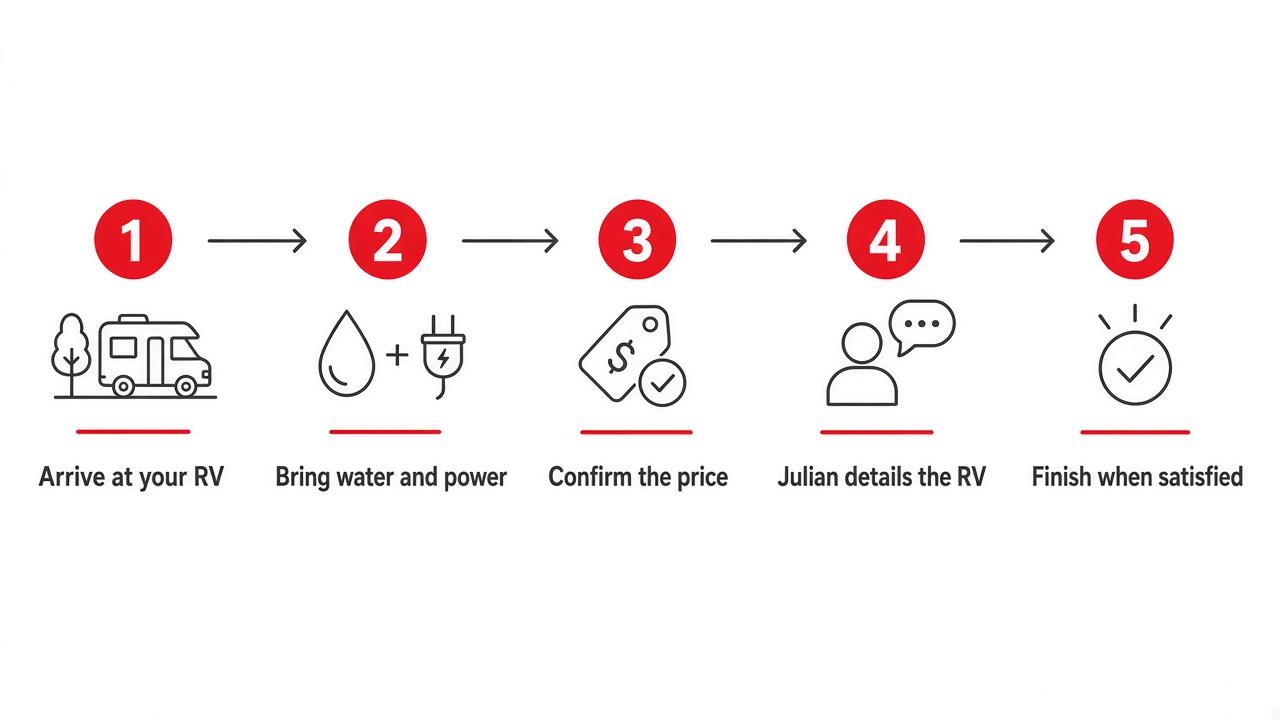
We’re Rotes & Roses, a fully mobile detailing service. We come to your driveway, storage lot, campsite or RV park within our North County San Diego area, including places like Escondido, Rancho Bernardo and Rancho Santa Fe. We bring spot-free water and power, so you never need to provide either.
Every job is done by Julian himself, start to finish. There’s no crew rotating through your rig and no handoff halfway through. We confirm the price before work begins, and the job isn’t finished until you’re satisfied.
| Step | What happens | Detail |
|---|---|---|
| 1 | Arrive at your RV | Driveway, storage lot, campsite or RV park |
| 2 | Bring water and power | No customer supply needed |
| 3 | Confirm the price | Before work begins |
| 4 | Julian details the RV | One person, start to finish |
| 5 | Finish when satisfied | Work ends when you’re satisfied |
Perspective: why we go slowly inside an RV
The fastest way to ruin an RV interior is to treat it like a car. Cabinet faces, vinyl wall coverings and fabric ceilings don’t forgive heavy chemicals or hard scrubbing, and the manufacturers’ own care guides say as much. So we start with the quietest method that could work and move up only when we need to. We test products in hidden spots, we ask what the material is before we touch it, and we’d rather spend an extra twenty minutes on a stubborn mark than risk a faded patch you’ll see every trip.
We also think owners are better served by honest advice than by a bigger invoice. If a seat cushion needs a professional upholsterer, or a soft spot suggests a leak that a shop should look at, we’ll say so. Doing every job alone means the person who quotes your RV is the same person who cleans it, and that’s the accountability we want you to have.
— Julian
How often should you book an interior detail?
There’s no official schedule, since RV makers don’t publish one for professional detailing. What we see in practice, and what most guides suggest, is a rhythm like this:
- Weekly or after every trip: vacuum, wipe high-touch and high-traffic areas, empty the trash, air the RV out.
- Every few months: a deeper clean of upholstery, windows, bathroom and galley, especially if you use the RV often.
- Once or twice a year: a full professional interior detail, ideally before a long travel season or before putting the RV into storage.
Shorten those intervals if you travel with pets, have children, smoke, or live in the RV. Grand Design’s 2026 owner manual advises keeping indoor air quality in check through ventilation and a clean interior, and names mold, pollen, pet dander and cigarette smoke among the pollutants to avoid. A regular detail is one practical way to keep those in check.
Between visits, a few habits do the most good:
- Ventilate after cooking and showering.
- Fix leaks as soon as you find them.
- Keep shoes at the door and use a mat.
- Blot spills immediately instead of wiping them.
- Open the RV up during storage so air can move through it.
What affects the price of RV interior detailing
Shops price RV interiors in two ways: by the foot, or by package. Either way, the final figure depends on a few things:
- Length and layout. More square footage and more slide-outs mean more surface and more time.
- Condition. Light dust is a different job from pet hair, ground-in dirt, spills or odor.
- Materials. Leather, delicate fabrics and heavy carpet take more care than hard surfaces.
- Add-ons. Odor treatment, extra stain work or pairing the interior with an exterior wash.
- Access. Whether the RV can be reached with room to work and open slides.
Our RV detailing starts at $9 per foot for an exterior wash. Interior cleaning is a separate quote based on floor plan, occupancy, pets and condition, so your price depends on the factors above. We confirm the price before we start, so there are no surprises when the job is done. Odor treatment is also available separately, starting at $134.99, for rigs where the smell is the main problem.
When you compare quotes from any detailer, ask what’s included. A low figure that covers only vacuuming and a wipe-down isn’t the same as a full interior detail with stain treatment, window work and bathroom cleaning.
Book RV interior detailing at your location
If your RV is in North County San Diego, we’ll bring everything to you. Tell us the length, the type of rig and what’s bothering you most, whether that’s stained cushions, pet hair, a lingering smell or just a season of road dust. We’ll confirm the price before work starts.
See our RV detailing service for details and to request a time. If you want to keep the interior in shape year-round, our maintenance plans offer recurring service, and our odor treatment and other specialty services cover problems a standard clean can’t solve. If you’re planning an exterior clean as well, our guide to removing bugs and tar after a road trip explains what to expect.
FAQ
Is RV interior detailing worth it compared with cleaning it myself?
For routine upkeep, doing it yourself is fine. A professional detail is worth it when you have set-in stains, odors, pet hair worked into fabric, or you’re preparing to sell or store the RV. The advantage is the right equipment and product knowledge for each material, which lowers the risk of damaging vinyl, laminate or upholstery.
Can I use household cleaners on my RV interior?
Usually not on everything. Winnebago and Jayco both recommend mild, material-appropriate cleaners and a hidden-spot test, and Jayco warns against solvents on vinyl. Check your owner’s manual first, and ask us if you’re not sure about a particular surface.
Do you need access to water and power at my RV?
No. We bring spot-free water and our own power, so we can work in your driveway, a storage lot or an RV park, anywhere within our North County San Diego service area.
What about motorhomes versus trailers and fifth wheels?
The process is the same in principle: surfaces are cleaned according to their materials. Motorhomes add a driver’s cab, dash and cockpit area, while towables are usually simpler to access. For either, our RV detailing starts at $9 per foot for an exterior wash, interior cleaning is quoted separately, and we confirm your final price before starting.
Can you remove odors from an RV?
Often yes, once we find the source. Pet, smoke, food and damp odors are common, and we offer a dedicated odor treatment. If the smell comes from moisture or a leak, we’ll point that out so you can get the cause repaired.
Sources
- What is Detailing? International Detailing Association
- Proper Cleaning of RV Fabrics, Materials and Appliances, Winnebago
- Cleaning Your RV: The Interior, Jayco
- Grand Design Foundation owner’s manual, 2026