
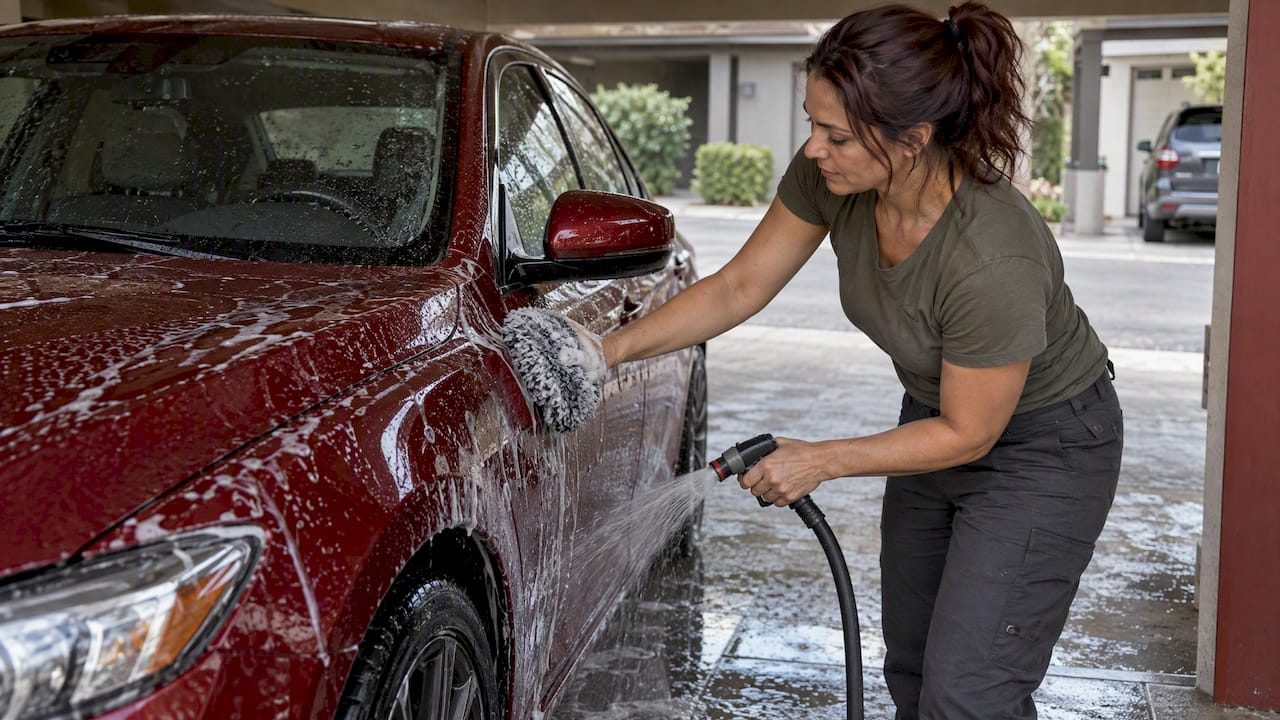
Eco-friendly car cleaning comes down to three things: using less water, keeping soapy runoff out of storm drains, and choosing products that are gentle on paint and on the environment. You can do all three in your own driveway with a few habit changes, or hand the job to a mobile detailer who brings water and tools to you. This guide covers both, with the numbers, the local rules and the mistakes that cost people paint.
TL;DR
- A home wash can use 80 to 140 gallons of water, while a car wash business uses about 30 to 45 gallons.
- The bigger problem is runoff: outdoor washing sends detergent-rich water carrying metals and hydrocarbons into storm drains.
- Use a dedicated car-wash soap, a shut-off nozzle, soft towels and a shaded, cool car. Household dish soap is the wrong tool.
- In San Diego County, washing at home is allowed only if you effectively stop runoff from reaching the storm drain.
- Protection (wax, sealant or coating) means fewer harsh washes later, which is the most overlooked eco-friendly move.
Table of Contents
- What actually makes car cleaning eco-friendly
- Why runoff matters more than the water bill
- How to wash your car at home with less water and less harm
- Waterless, steam and conventional: how they compare
- Protection is the quiet eco-friendly choice
- Our perspective on eco-friendly detailing
- When a mobile detailer makes sense
- Eco-minded detailing at your location in North County
- A simple routine that stays green
- FAQ
- Sources
What actually makes car cleaning eco-friendly
“Eco-friendly” gets stamped on everything from soap bottles to car wash signs. Strip away the marketing and it comes down to a short list of measurable things.
Water volume. Washing with a free-running hose is the single biggest waste. The Center for Environmental Health notes that individuals can use 80 to 140 gallons to wash one car, against roughly 30 to 45 gallons at a car wash business.
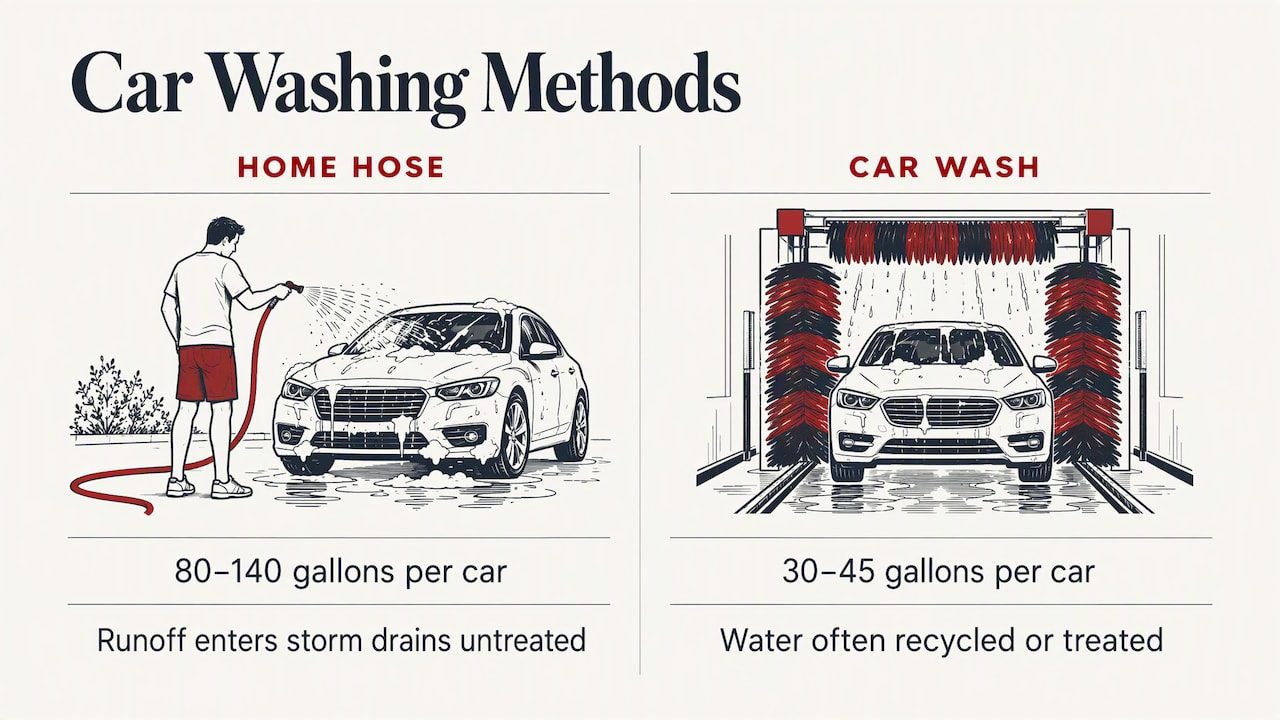
Where the dirty water goes. Water that runs down your driveway does not go to a treatment plant. In most neighborhoods it enters the storm drain and flows to creeks and the ocean, untreated. The EPA’s stormwater guidance says commercial washes often recycle water or must treat it before it goes to the sanitary sewer, which is why they are considered safer than residential washing.
What is in the soap. Phosphates and other nutrients feed algae growth in waterways. The EPA suggests nontoxic, phosphate-free soaps used sparingly, and waterless products for spot-cleaning.
How often you have to re-clean and re-correct. A car with a sealant or coating needs gentler, less frequent washing. A car washed with the wrong soap or a gritty towel ends up needing polishing sooner. Fewer chemicals and fewer passes over the paint is also a sustainability win.
Why runoff matters more than the water bill
Most people think about gallons. Regulators think about what is dissolved in those gallons. Outdoor car washing can send water with nutrients, metals and hydrocarbons into storm drains. Brake dust, oil drips, tire residue and road film all come off in the rinse, and the soap carries it along.
The San Diego Regional Water Quality Control Board answers the question directly in its municipal storm water permit FAQ. You may wash your car, as long as you stop the wash water from running off your driveway into the storm drain. The board notes that car wash water typically contains detergents, oil and other automotive fluids, and metals.
For North County residents in Encinitas, Carlsbad, Oceanside, Vista, San Marcos and Escondido, that is the rule of thumb. If your driveway slopes to the street, a casual hose-down is the exact scenario the rule is aimed at.
Three ways to keep wash water out of the drain
The EPA lists the practical options: use a commercial car wash, wash on a pervious area such as grass or gravel, or use a car-wash kit that redirects water away from storm drains. In practice:
- Commercial wash. Simplest, and usually the lowest water use per vehicle. The tradeoff is the brushes (see below).
- Lawn or gravel. Works for a light wash with gentle soap. Not a good idea after off-road mud or an oily engine bay.
- Drain cover or containment mat. A kit that blocks or diverts the flow so water can be collected and disposed of properly.
How to wash your car at home with less water and less harm
If you prefer to do it yourself, a few changes make a real difference. Most come from the EPA and Consumer Reports guidance.
Set up before you start
- Park in shade and let the car cool. Consumer Reports advises not washing a car whose body is hot, such as after sitting in direct sun. Soap dries on the panel, leaves spots and tempts you to rinse more.
- Fit a spray nozzle. The EPA recommends a nozzle that restricts water flow. Turn it off between panels.
- Choose your spot. Grass or gravel if you are using soap, or contain the water.
Pick the right soap
This is where “natural” gets confusing. Vinegar, dish soap and all-purpose sprays are popular, but Consumer Reports recommends a dedicated car-wash product made for automotive paint. It says household hand soap, dishwashing detergent and glass cleaner may strip protective wax.
Stripped wax means more bare paint, more frequent re-waxing and more product used overall. A gentle, pH-balanced car soap that is phosphate-free and labeled biodegradable is the better eco choice. For stuck-on bugs, AAA notes that pH-balanced automotive soaps can clean bug splatter without stripping wax or damaging paint, as long as you tackle it promptly.
What to check on the label:
| Look for | Why it matters |
|---|---|
| Phosphate-free | Phosphates feed algae in waterways |
| Biodegradable | Breaks down faster after it escapes |
| pH-balanced or pH-neutral | Safe for wax, sealants and coatings |
| Concentrated formula | Less plastic, less shipping, fewer bottles |
| Made for automotive paint | Avoids stripping protection |
Be skeptical of a front-label claim with no ingredient detail. “Green” and “natural” are not regulated terms on a car-care bottle.
Dry without scratching
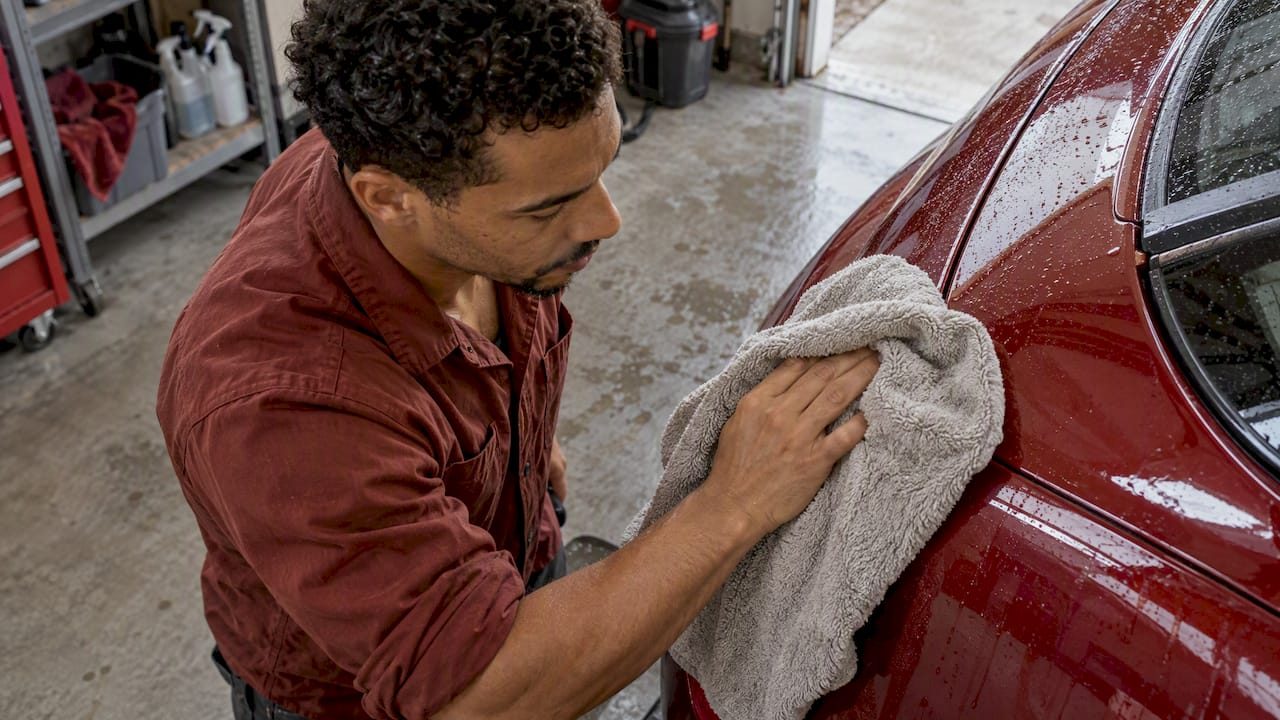
Consumer Reports recommends drying with a chamois or soft terry towels, blotting rather than dragging. It also warns that abrasive towels can leave hairline scratches. Those scratches are the reason many cars end up needing paint correction years early.
Skip the extras you do not need
Tire shine is a good example. Consumer Reports reports that Bridgestone says its tires already contain antioxidants and waxes that protect them, so dressing is not needed for preservation. One less spray can, one less product running down the driveway.
Waterless, steam and conventional: how they compare
Three approaches dominate searches for eco-friendly car cleaning. None is perfect for every car.
| Method | Water use | Best for | Watch out for |
|---|---|---|---|
| Conventional hose wash | Highest at home, 80 to 140 gallons by CEH’s figure | Heavily soiled vehicles, if you contain runoff | Runoff, wasted water |
| Commercial car wash | About 30 to 45 gallons, often recycled or treated | Quick, regular cleaning | Brush scratches, harsh chemicals |
| Waterless spray and microfiber | A few ounces | Light dust, fresh fingerprints, spot cleaning | Gritty, muddy cars can scratch |
| Steam | Very little | Interiors, wheels, engine areas | Needs experience and the right equipment |
Waterless products work because the spray encapsulates dust so a clean microfiber towel can lift it. On a lightly dusty car that is a great option. On a car caked with mud or salt film, you are rubbing grit across paint. The EPA’s own advice reflects this balance: waterless products are best for spot-cleaning, not as a replacement for every wash.
The drive-through wash trap
Commercial washes are better for the water supply, but not always for your paint. A manager at a AAA Approved Auto Repair facility says dirt, sand or rocks from a car ahead can get caught in the brushes and dragged across the next vehicle, causing scratches and marks. Touchless options avoid that, at the cost of stronger chemicals in many cases.
Protection is the quiet eco-friendly choice
The greenest wash is the one you do less often, and the easiest wash is one where dirt does not bond to the paint.
Consumer Reports notes that waxing once or twice a year can act as a sealant, help keep corrosive substances from sticking to paint, and add protection against UV rays. Under the Southern California sun, that UV point is not trivial. Clear coat that fades and oxidizes eventually needs aggressive correction.
Longer-lasting options sit above wax. A ceramic coating forms a harder, slicker layer, so dirt releases with a gentle wash and fewer products. A paint correction beforehand removes swirls and light scratches so the coating locks onto smooth paint. Ceramic coating is not a force field, and it still needs gentle washing, but it changes how much effort and how many chemicals a clean car takes.
Our perspective on eco-friendly detailing
We hear “eco-friendly” in nearly every conversation about mobile detailing, and we think the useful version is plain and practical.
First, we do not believe in magic labels. What matters is how much water a job needs, where it goes and what is in the bottle. That is why we always arrive with our own spot-free water and power, and why our water containment system keeps runoff from reaching storm drains. We recover the waste water with high-GSM towels and a wet vac. Nothing is drawn from your hose bib, your outlet or your neighbor’s, and you do not have to be home with a spigot ready.
Second, the best way to be gentle on the planet is to be gentle on the paint. A car that is washed correctly with the right soap and soft towels, then protected, needs fewer corrective steps and fewer products over its life. We would rather put a sealant or coating on a well-kept car than chase swirl marks on a neglected one.
Third, details matter and they cannot be rushed. Every job is done by me personally, start to finish, with the price confirmed before work begins and a complimentary multi-point vehicle inspection included. Catching a fluid seep or a worn component early often saves a bigger repair, and a bigger mess, later.
If a detailer will not tell you what products they use or how they handle wash water, keep looking. A good one answers without hesitation.
When a mobile detailer makes sense
Doing it yourself is fine for a light weekly rinse. Hiring a pro earns its place in a few situations:
- Your driveway drains to the street. Containment is harder than it sounds, and the San Diego storm water rules put the responsibility on whoever is washing.
- You live in a condo, HOA or apartment where hosing a car is not practical or allowed.
- The job is bigger than a wash. Pet hair, odors, oxidized headlights, swirl marks, an RV or a boat.
- You want protection applied properly. Coatings and sealants depend on prep. Rushed prep means early failure and doing it all again.
- Time is the issue. A mobile service comes to your home or office, on flexible hours.
Eco-minded detailing at your location in North County
We are a fully mobile service in North County San Diego. We arrive with water and power on board, so there is nothing for you to set up, and every job is handled by one person from the first rinse to the final inspection.
Published starting prices, so you can plan:
| Service | Price |
|---|---|
| Exterior detail | $104.99 to $333.48 |
| Interior detail | $174.99 to $414.99 |
| Full detail | $234.99 to $594.99 |
| Paint correction | from $424.99 |
| Ceramic coating | from $1,249 |
| Motorcycle detailing | from $164.99 |
| Maintenance plans | $175 to $225 per month, or $110 to $160 per week |
If you want to keep a protected car clean without thinking about it, a recurring plan spreads the work out and keeps each visit light. You can see the full range on our auto detailing page, look at before and after results, or book at rotesandroses.com.
A simple routine that stays green
Whether you do it yourself or have it done, this rhythm keeps a car clean with minimal waste:
- Weekly or every other week: a light touch. Waterless spray and microfiber for dust, or a quick rinse with a nozzle.
- Monthly: a proper wash with automotive soap, on grass or with containment, or at a commercial wash that recycles water. Clean bugs and bird droppings the day you see them.
- Once or twice a year: reapply wax or sealant, as Consumer Reports suggests, or maintain a coating. Check headlights and glass for early haze.
- When swirls and dullness show: call for correction rather than waiting. Heavier damage needs heavier work.
- Interior as needed: vacuum first, then use a gentle cleaner on a towel, not sprayed everywhere. Odors and pet hair deserve a proper treatment rather than layers of air freshener.
The pattern is simple: low water, contained runoff, gentle products, and protection so you can wash less aggressively.
FAQ
Is waterless car cleaning really eco-friendly?
For light dust and fingerprints, yes. It uses a few ounces of product rather than dozens of gallons, and there is no runoff. For a muddy or salty car, a rinse is safer for the paint, because dragging grit with a towel causes scratches.
Is it legal to wash my car in my driveway in San Diego County?
The San Diego Regional Water Quality Control Board says you may wash your car as long as you effectively stop the runoff from entering the storm drain. Washing on grass or gravel, or using containment, helps. Check your city’s own stormwater page for local details.
Can I use dish soap or vinegar to wash my car?
It is better not to. Consumer Reports says household hand soap, dish detergent and glass cleaner may strip protective wax. A dedicated, phosphate-free car-wash soap is the safer choice for both the paint and the environment.
Is a commercial car wash better for the environment than washing at home?
Usually, for water and runoff. The EPA says commercial washes minimize stormwater impacts and often recycle or treat their water. Brush washes can scratch paint, so a touchless wash or a hand wash is gentler on a car you care about.
Does ceramic coating make car washing greener?
It can. A coating makes dirt release more easily, so washes can be gentler and less frequent. It still needs proper washing, and the results depend on the prep done before it goes on.
Sources
- Center for Environmental Health: Looking for an Eco-Friendly Way to Clean Your Car?
- EPA: Stormwater Best Management Practice, Vehicle Maintenance and Washing
- EPA: What You Can Do in Your Home
- San Diego Water Board: Municipal Storm Water Permit FAQ
- Consumer Reports: How to Wash Your Car Like a Pro
- AAA: Dead Bugs on Your Windshield
- AAA: 6 Car Wash Mistakes That Could Damage Your Vehicle
Recommended
- Auto Detailing at Your Driveway | Mobile Auto Detailing | Rotes & Roses Detailing Services
- Engine bay cleaning during mobile auto detailing | Rotes & Roses Detailing Services
- Mobile Interior Car Detailing | Rotes & Roses Detailing Services
- Car Odor Treatment in North County San Diego | Rotes & Roses Detailing Services