
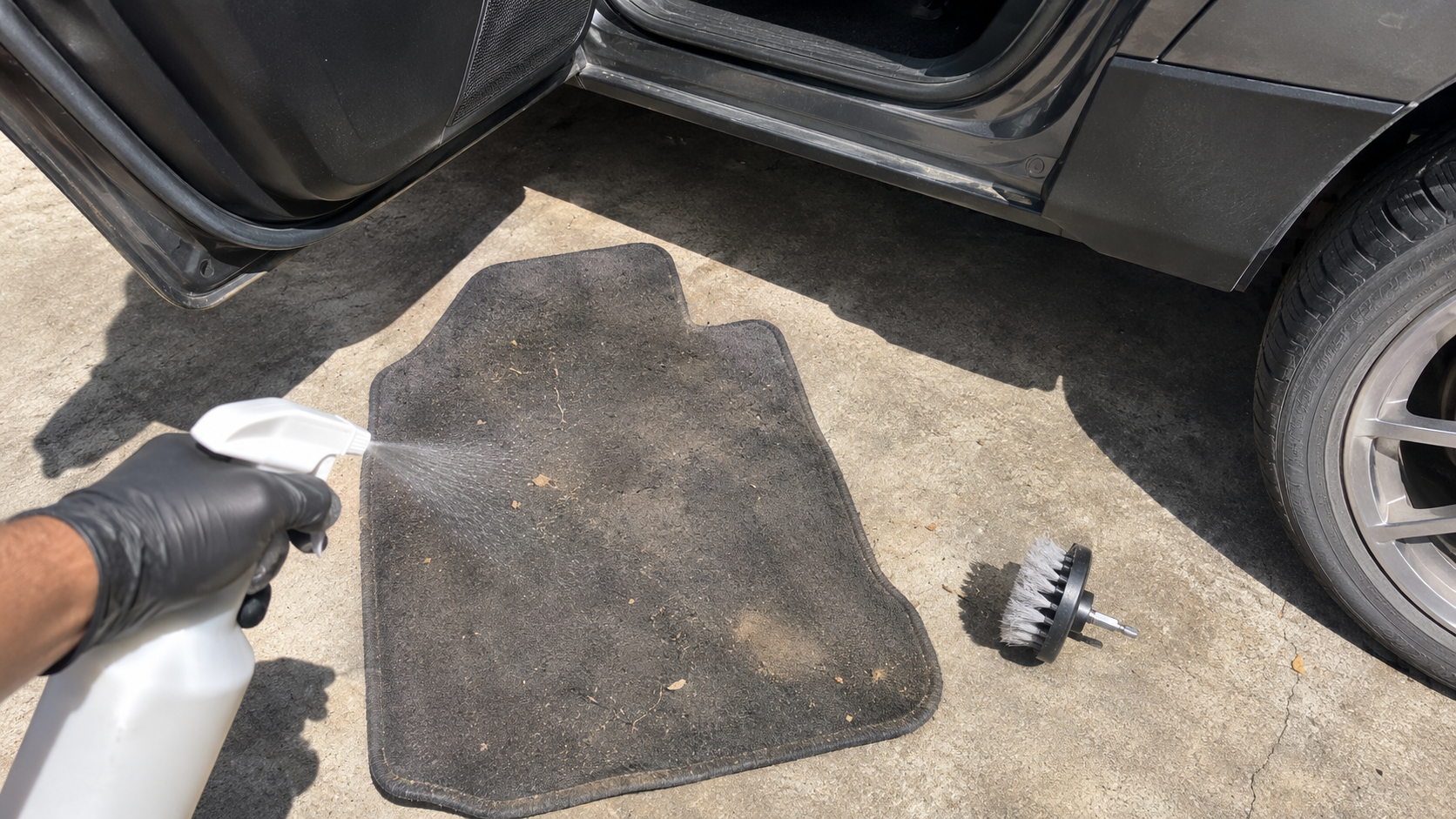
If the cabin smells wrong after a vacuum and wipe, the smell has a source. Smoke in the headliner. Milk under a seat rail. Damp carpet padding. A cabin filter loaded with dander. Spraying scent into that air adds chemicals to a small box you sit in. It does not remove what is feeding the odor.
This guide explains why source-first treatment works, what our Odor Treatment from $134.99 covers, how it differs from a standard interior detail, and when mold or biohazard pricing applies instead. Prices are from the live site as of November 5, 2026.
TL;DR
- Kill the source, then treat residual odor. Air fresheners alone fail and add VOCs to a small cabin.
- Odor Treatment starts at $134.99 and reserves about three hours. It is a specialty service, not an automatic full interior.
- Tell us what you smell, how long it has been there, and whether smoke, pets, food, mildew or spills are involved. Photos help.
- Mold, urine, vomit and other bodily fluids are priced on mold or biohazard schedules, not as a silent upgrade inside $134.99.
- Aftercare matters: dry the cabin, replace a dirty cabin filter, and fix the leak or habit that caused the smell.
Table of Contents
- Smell is a clue, not the job
- Why masking fails
- Common odor sources in daily drivers
- What Odor Treatment includes
- Price and time
- Smoke, food, pets and mildew
- When mold or biohazard pricing applies
- DIY steps that help before a pro visit
- Enzyme cleaners vs fragrance vs ozone
- How odor work pairs with an interior detail
- After the visit: keeping the cabin neutral
- What to put in the booking notes
- A simple decision tree
- Our perspective: no guarantee before inspection
- Having us handle it
- FAQ
- Sources
Smell is a clue, not the job
Notice when the smell is strongest: first fan-on, after heat, only in the trunk, only after rain. That timing points to vents, soft surfaces, carpet padding or a fresh spill. Write it down before you spray anything. Fragrance hides the map.
Why masking fails
A car cabin is a small indoor environment. The U.S. EPA’s indoor air pages list cleaning products, fragrances and similar products among common sources of volatile organic compounds. The American Lung Association’s overview of air pollution inside cars notes that pollutants can concentrate in the cabin. Adding a stronger scent on top of a biological or food source does not delete the source; it stacks smells and chemicals.
Heat makes it worse. North County sun warms seats and carpet, volatilizes whatever is trapped in foam, and pushes odor through the vents when you park and when you drive. If the smell returns every hot afternoon, you are smelling a reservoir, not a lack of perfume.
Source-first treatment means: identify the material that holds the odor, clean or remove what can be cleaned, dry it completely, then decide whether an oxidizer step (such as ozone, used only when appropriate and with the car unoccupied) is warranted for what remains.
Common odor sources in daily drivers
| Source | Where it hides | Usual path |
|---|---|---|
| Spilled milk, smoothies, food | Seat foam, carpet padding, under rails | Extraction + enzyme cleaners; may need odor treatment after |
| Pet urine | Padding, belts, cargo carpet | Biohazard assessment; not a basic odor spray |
| Smoke | Headliner, vents, belt paths, cargo fabric | Deep clean soft surfaces; odor treatment; filter change |
| Wet carpet / leak | Floor padding, spare tire well | Dry, fix leak, then treat; mold rules if growth is visible |
| Gym bags / damp gear | Trunk carpet, rear seats | Clean + dry; habit change matters as much as chemistry |
| Dead rodent | Cabin or engine bay | Rodent decon pricing after inspection |
Spills have their own add-ons on a detail: spot extraction $50, full extraction $160. Those clean the material. Odor treatment is the next step when the smell survives cleaning or when the source is diffuse (smoke throughout the cabin).
What Odor Treatment includes
Odor Treatment on our specialty menu is a targeted visit quoted by source. The starting price reserves time to inspect, clean the affected materials we can reach, and apply the treatment path that matches what we find. It is not a promise that every odor vanishes before we have seen the car, and it is not a full Executive interior unless you book that too.
Typical flow:
- Interview: what you smell, when it is strongest, history of spills, smoke, pets or leaks.
- Inspection: seats, carpet edges, trunk well, under mats, vents, and any visible staining.
- Source cleaning: extraction, enzyme treatment, or material-safe cleaning on the affected areas.
- Residual treatment: only if the source path supports it, with the car unoccupied when oxidizers are used.
- Dry-down guidance: windows, airflow, and time before the cabin is closed up again.
Seat removal is not automatic. If we need to pull seats to reach soaked padding, that is discussed before we do it.
Price and time
Odor Treatment starts at $134.99 and is booked with about three hours reserved. Final scope depends on how deep the odor goes and what materials are involved. Smoke that reached beyond the surface, long-term mildew, or multiple sources can expand the visit. We confirm before we proceed.
Related prices that are not the same service:
| Situation | Where it lives on the site | From |
|---|---|---|
| Standard interior reset | Interior detail | $174.99 Express sedan |
| Spill extraction add-on | Spill cleanup | $50 spot / $160 full |
| Mold cleanup | Mold removal | $299.99 to $449.99 light to moderate; $549.99 to $1,000 severe |
| Bodily fluids | Biohazard decon | $249 per affected area |
| Rodent | Specialty | $249 engine / $425 interior / $674 both |
Smoke, food, pets and mildew
Smoke. Nicotine and tar film coat soft surfaces and the HVAC path. Cleaning fabric and wiping hard surfaces has to come first. An oxidizer on a dirty cabin wastes the visit. Replace the cabin filter after smoking history; a loaded filter re-emits odor.
Food and drink. Sugar and dairy smell worse with heat. The sooner you extract, the less likely the padding is permanently tagged. Old spills may need odor treatment after extraction.
Pets. Hair and dander are one problem; urine is another. Hair add-ons are listed on pet hair removal. Urine belongs in the contamination conversation.
Mildew. Musty smell after rain or a wet week often points to damp padding or a clogged drain (sunroof drains are a frequent culprit). Dry the cabin and fix the water path. Visible mold growth moves the job onto the mold price list. EPA mold guidance focuses on moisture control and careful cleanup; we follow that logic and decline work that needs structural remediation.
When mold or biohazard pricing applies
If you see fuzzy growth, widespread spotting on fabric, or smell heavy must with water damage history, send photos before booking odor treatment. Light to moderate mold is $299.99 to $449.99. Severe or unsafe mold is $549.99 to $1,000.
Vomit, urine, feces and other bodily fluids are biohazard decontamination from $249 per affected area, with screening first. Do not book those as a $134.99 odor visit and hope. The booking notes should say what happened.
DIY steps that help before a pro visit
- Remove trash and anything organic left under seats.
- Pull mats and dry them in sun.
- Blot (do not rub) fresh spills; extract if you own a wet vac; leave doors open until dry.
- Replace a due cabin air filter.
- Stop using heavy air fresheners for a few days so you can smell the real source.
- Fix obvious water entry: spilled bottles in the trunk, wet towels, a known sunroof drip.
Do not mix strong household chemicals in the cabin. If you are considering a consumer ozone machine, read car ozone treatment first: the car must stay empty, source cleaning still comes first, and the EPA’s ozone-generator pages warn that ozone is a lung irritant with weak odor performance at safe levels. When in doubt, wait for a pro visit.
Enzyme cleaners vs fragrance vs ozone
Honest order of operations:
- Remove or clean the source (trash, spill, wet mat, filthy filter).
- Enzyme or material-safe cleaners on organic residues you can reach.
- Oxidizers / fogger / ozone only as residual tools on an unoccupied car after cleaning, when the visit calls for them.
- Fragrance last, if at all. It is not a fix.
Ozone gets its own post because people search it by name and deserve the EPA caveats without turning this page into a machine manual. For method detail, safety and sequencing, use car ozone treatment. This page stays on the wider “where is the smell coming from” problem.
How odor work pairs with an interior detail
A dirty cabin should be cleaned before or as part of odor work. Many customers book an Executive Interior from $284.99 (sedan) plus odor treatment when the car needs both a deep clean and a smell path. Express alone can improve light food smells once crumbs and residue are gone, but it will not replace a dedicated odor visit for smoke or urine history.
Our interior detailing guide covers package scope. Full Inside & Out packages clean both halves of the car but still treat odor treatment as its own specialty when the smell is the main complaint.
After the visit: keeping the cabin neutral
Open doors or crack windows so residual moisture can leave. If we used extraction, give seats time before heavy use. Avoid parking closed-up in full sun the first afternoon if foam is still drying; heat on damp padding recreates musty smell.
Replace the cabin filter if it is due or if smoke or pets were the issue. Check under mats after the next rain. If a sunroof or door seal is feeding water, detailing will not outrun the leak.
Skip perfume bombs for a week so you can judge the real result. Clean is quiet. If a specific smell returns in the same spot, tell us which seat or corner; that usually means a pocket we need another pass on, not a need for more scent.
What to put in the booking notes
Plain language helps more than diagnoses:
- “Spilled protein shake under the driver’s seat two weeks ago, still smells when it is hot.”
- “Smoked in the car for a year, stopped three months ago, headliner still smells.”
- “Dog urine on the rear carpet, dried, smell returns after rain.”
- “Musty only after the car sits closed overnight.”
Add photos of stains. Mention if anyone has asthma or chemical sensitivity so we can plan ventilation and product choice. If you already tried a DIY enzyme or ozone product, say what you used so we are not stacking treatments blindly.
A simple decision tree
- Can you see or name the source (spill, trash, wet mat, ash)? Clean or remove that first.
- Is there visible mold? Photos → mold menu, not a spray.
- Are bodily fluids involved? Photos → biohazard menu.
- Is the cabin generally dirty? Book interior cleaning with or before odor treatment.
- Is the smell residual after cleaning? Odor Treatment from $134.99, with oxidizers only if the car can sit empty.
If you jump to step 5 while step 1 is still true, you will likely buy another visit. The decision tree exists to save that loop.
Coastal cars pick up mildew notes faster when wet gear sits in a closed trunk. Inland cars pick up dust and forgotten food under seats. Same playbook, different first clues.
Our perspective: no guarantee before inspection
— Julian
I will not promise a permanent “new car smell” from a text description. I will promise to look for the source, tell you what I find, and price the work that matches it. If the padding under a seat is soaked from a year-old spill, we talk about what can be cleaned in place and what cannot. If someone smoked in the car for a decade, we talk about realistic improvement, not magic.
The $134.99 starting price exists so people can book a serious odor visit without pretending it is a $20 spray. If photos show mold or biohazard, I will move you to the right menu before you pay a deposit for the wrong one.
Having us handle it
Book from odor removal and describe the smell in plain language. Add photos of stains or growth. If you also need a deep clean, book the interior or full detail in the same request so we can schedule enough time. For recurring cabin resets after the odor is under control, maintenance plans start from $110 a visit.
FAQ
How much does car odor removal cost?
Odor Treatment starts at $134.99 with about three hours reserved. Mold, biohazard and rodent jobs use their own schedules.
Do you guarantee the smell will be gone?
No blanket guarantee before inspection. Results depend on the source, how long it sat, and the materials involved.
Is ozone included?
Oxidizer steps are used when the source path calls for them and the car can sit unoccupied. They are not a substitute for cleaning and are not a silent default in every booking.
Will an air freshener fix it?
No. It masks and adds VOCs. Clean the source.
Can you remove cigarette smell?
Often we can improve it a lot after cleaning soft surfaces and treating residual odor. Long-term heavy smoke may not return to factory-neutral.
Should I book an interior detail too?
If the cabin is dirty, yes. Clean first, then treat what remains. Ask us to help pick Express, Executive or odor-only based on photos.
Sources
- Volatile Organic Compounds’ Impact on Indoor Air Quality (U.S. EPA)
- Indoor Pollutants and Sources (U.S. EPA)
- Mold Cleanup in Your Home (U.S. EPA)
- About Mold and Health (CDC)
- Air Pollution in Your Car (American Lung Association)
- BBB Tip: How to Research Any Business Before You Buy